
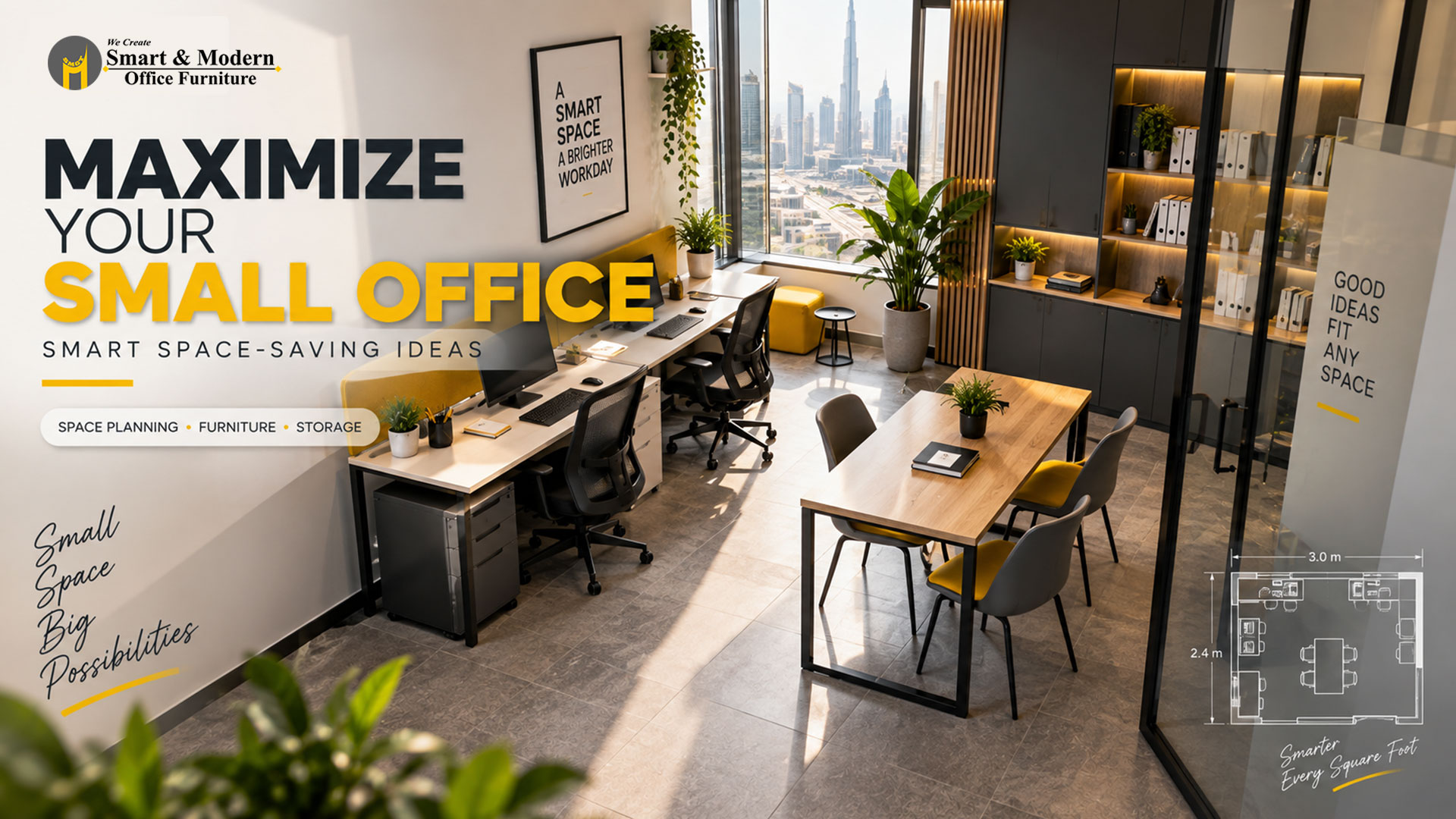
How to Maximize Your Small Office: Smart Space-Saving Ideas
-
By Smart Modern
- Posted on
- 0 comments
A small office does not have to feel cramped or uncomfortable. With the right office layout, furniture, and space planning, even a limited workspace can become functional, professional, and productive.
The key is to make every part of the office work efficiently without filling the room with unnecessary furniture. Here are some practical ways to maximize a small office.
1. Start With Smart Space Planning
Before buying furniture, understand how your team actually uses the office. Consider where employees work, where people meet, how visitors move through the space, and which areas are rarely used.
A well-planned layout can improve movement and prevent furniture from blocking important pathways. Current UAE workspace-planning guidance also emphasizes designing around how teams actually work rather than simply filling available floor space with desks.
2. Choose Space-Saving Office Furniture
Furniture has a major impact on how large or small an office feels.
Instead of oversized desks, consider compact workstations, benching systems, and modular office furniture. These solutions can provide employees with an efficient workspace while using less floor area.
Desks with built-in cable management and integrated storage can also help reduce clutter and keep the workspace organized.
3. Make Use of Vertical Space
When floor space is limited, look upwards.
Tall storage cabinets, wall-mounted shelves, overhead storage, and vertical organizers can provide additional storage without taking up valuable floor area.
Keeping frequently used items organized and reducing unnecessary objects around desks can make a small office feel considerably more open.
4. Create Flexible Spaces
A small office may not have enough space for separate rooms for every activity. Instead, create areas that can serve multiple purposes.
For example, a small meeting table can also function as a collaborative workspace, while a compact lounge area can be used for informal meetings or short discussions.
Flexible furniture allows the same space to support different activities throughout the day.
5. Keep Workstations Comfortable
Saving space should never mean sacrificing ergonomics.
Choose office chairs that provide appropriate support and desks that provide enough room for monitors, keyboards, and other essential equipment. OSHA recommends considering adequate workspace, monitor placement, leg clearance, and the ability to change working postures when setting up computer workstations.
A smaller desk can work well—but it should still provide enough space for comfortable daily work.
6. Reduce Visual Clutter
A cluttered office can make a small space feel even smaller.
Use consistent furniture, simple colors, organized storage, and clean cable management to create a more open appearance. Glass partitions or low-height screens can also help divide areas without making the office feel completely closed off.
Natural light and thoughtful placement of furniture can further improve the overall feeling of space.
Final Thoughts
Maximizing a small office is not about fitting in as much furniture as possible. It is about using the available space intelligently.
With smart space planning, compact workstations, vertical storage, flexible furniture, and ergonomic design, a small office can become a comfortable and professional workplace.
