
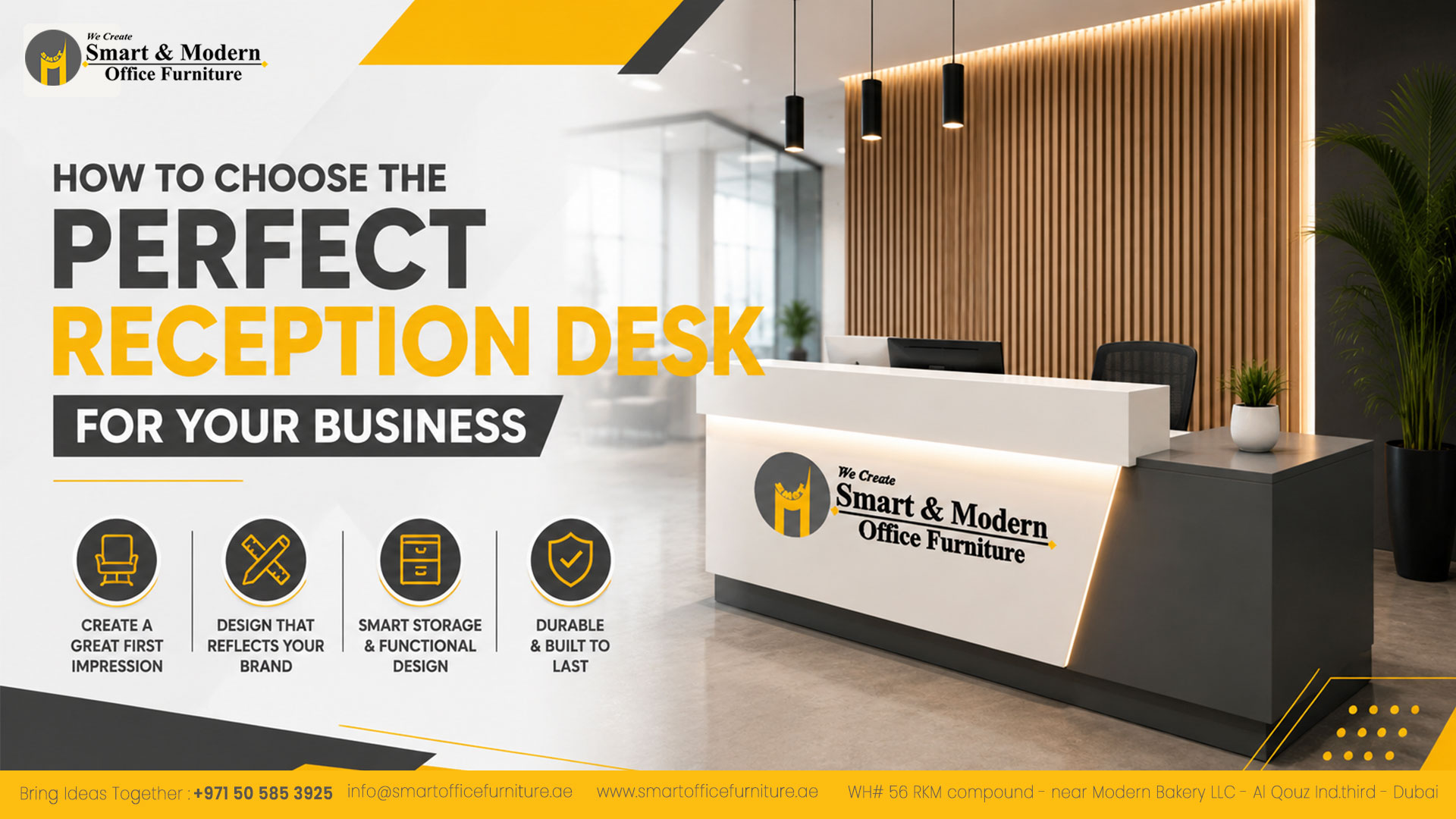
How to Choose the Perfect Reception Desk for Your Office
-
By Smart Modern
- Posted on
- 0 comments
The reception area is often the first place visitors see when they enter your business. A well-designed reception desk can create a professional first impression while providing a practical workspace for reception staff. Whether you are setting up a new office or upgrading your existing reception area, choosing the right desk requires careful consideration of design, size, functionality, and durability.
1. Consider the Size of Your Reception Area
Before choosing a reception counter, measure the available space. The desk should provide enough working space without making the reception area feel crowded.
Consider space for visitors, chairs, walkways, doors, and other office furniture. A properly sized reception desk allows employees to work comfortably while keeping the entrance welcoming and organized.
2. Choose a Design That Matches Your Brand
Your reception desk should reflect the overall style of your business. A modern company may prefer a clean, minimalist modern reception desk, while a corporate office might benefit from a more sophisticated and premium design.
Consider your brand colours, office interiors, materials, and finishes when selecting the desk. A consistent design can create a stronger and more professional brand image.
3. Focus on Functionality
A reception desk is not only about appearance. It needs to support the daily tasks of your reception team. Spacious work surfaces, Storage cabinets and drawers, Cable management, Computer and monitor space, Easy access to essential documents, Comfortable working height.
4. Select the Right Height
Reception desks are available in different heights and configurations. Some designs provide a higher front counter for visitors while maintaining a comfortable working height for staff.
When selecting a reception desk for office, consider both employee comfort and visitor interaction. The desk should allow reception staff to communicate naturally with guests while maintaining a professional appearance.
5. Choose Durable Materials
Reception furniture is used every working day, so durability is important. Choose materials and finishes that can withstand regular use and are easy to maintain.
High-quality laminates, wood finishes, glass elements, metal details, and other durable materials can create an attractive reception desk while supporting long-term use.
6. Think About Storage and Technology
Modern reception areas often require computers, telephones, printers, charging equipment, and other technology. Your desk should have enough space to accommodate these essentials without creating visible cable clutter.
Built-in storage and effective cable management can help maintain a clean and professional reception area.
7. Create a Welcoming First Impression
The reception desk should work together with the rest of the reception area. Consider pairing it with comfortable visitor chairs, suitable lighting, branding elements, and complementary office furniture.
The goal is to create a reception space that feels professional, welcoming, and organized.
Final Thoughts
Choosing the perfect reception desk involves more than selecting an attractive design. Consider the available space, functionality, ergonomics, materials, storage, technology, and your company’s brand identity.
A thoughtfully designed reception desk can improve the working experience for employees while creating a strong first impression for visitors. With the right combination of style and functionality, your reception area can become a professional and welcoming introduction to your business.
