
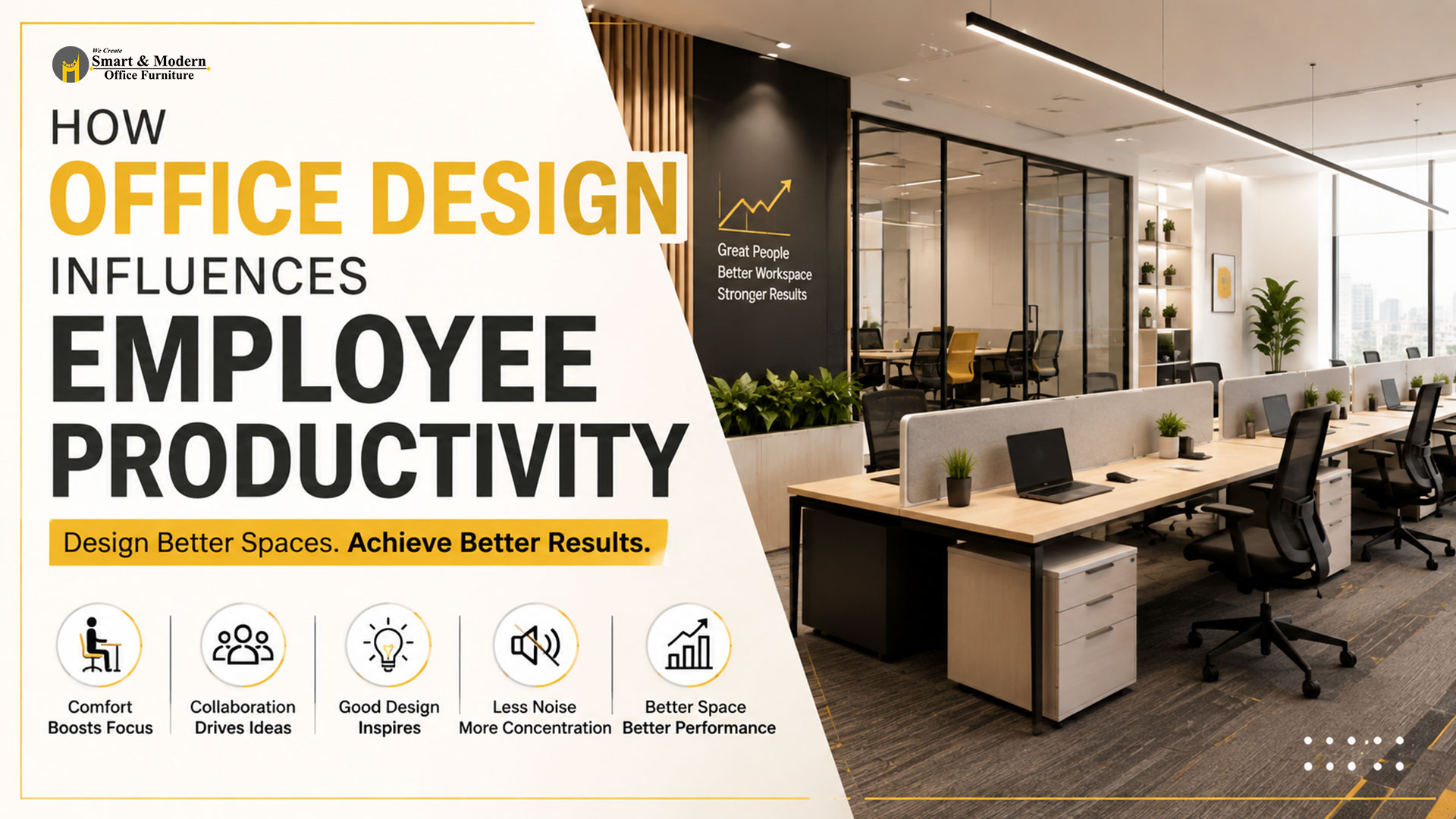
How Office Design Influences Employee Productivity
-
By Smart Modern
- Posted on
- 0 comments
A well-designed office is more than a place where employees sit and work. The right office design can influence how people collaborate, concentrate, communicate, and experience their working day. From office furniture and workspace layout to lighting, privacy, and noise control, every element can contribute to creating a more productive workplace.
For businesses looking to improve their employee productivity, investing in thoughtful workplace design can be an important step.
1. Create a Functional Office Layout
The way an office is arranged can directly affect how employees move and work. A good office layout should provide enough space for individual work while also creating areas where teams can collaborate.
Research comparing different office layouts found that zoned open-plan and team-office designs performed better than conventional open-plan arrangements on several measures, including satisfaction and self-reported productivity.
Instead of putting every employee into one large open area, businesses can create separate zones for focused work, meetings, teamwork, and relaxation.
2. Invest in Ergonomic Office Furniture
Comfort is an important part of a productive workplace. Employees who spend long hours at a desk need suitable ergonomic office furniture, including supportive office chairs and properly designed workstations.
An ergonomic office chair with adjustable height, lumbar support, armrests, and a comfortable backrest can help employees create a workspace suited to their individual needs.
Similarly, well-planned desks and workstations can provide enough working space while keeping essential equipment organized.
3. Reduce Workplace Noise
Noise is one of the major challenges in busy offices. Conversations, phone calls, meetings, and equipment can create distractions that make it harder for employees to concentrate.
Research has found that environmental stressors such as noise can negatively affect perceived and cognitive work performance.
Using acoustic panels, partitions, meeting rooms, and designated collaboration areas can help create a better balance between communication and concentration.
4. Design Spaces for Different Work Styles
Not every employee performs the same type of work. Some tasks require deep concentration, while others depend on communication and teamwork.
A modern workspace design should therefore include different types of areas. Quiet zones can support focused work, while collaborative spaces can encourage meetings, brainstorming, and team discussions.
Research also suggests that workspace design should take the nature of employees’ work into account, as collaborative tasks and concentration-heavy tasks can benefit from different environments.
5. Make the Office Visually Comfortable
The colours, lighting, materials, and overall appearance of an office can influence the workplace experience. Natural-looking materials, suitable lighting, and a balanced colour palette can help create a more comfortable and professional environment.
A visually appealing office can also strengthen your company’s identity and create a positive impression for employees, clients, and visitors.
6. Encourage Collaboration
Good office interior design should make teamwork easier without disturbing employees who need to focus.
Meeting tables, collaborative workstations, breakout areas, and flexible seating can provide employees with dedicated spaces to exchange ideas and work together.
The goal is not simply to create an open office, but to create a workplace where employees can choose the environment that best supports their task.
Conclusion
Office design and employee productivity are closely connected. A thoughtful workspace can support concentration, collaboration, comfort, and efficient working.
From ergonomic office furniture and functional layouts to noise management and collaborative spaces, every design decision matters. By creating an office around the actual needs of employees, businesses can build a workplace that is comfortable, professional, and designed for better performance.
