
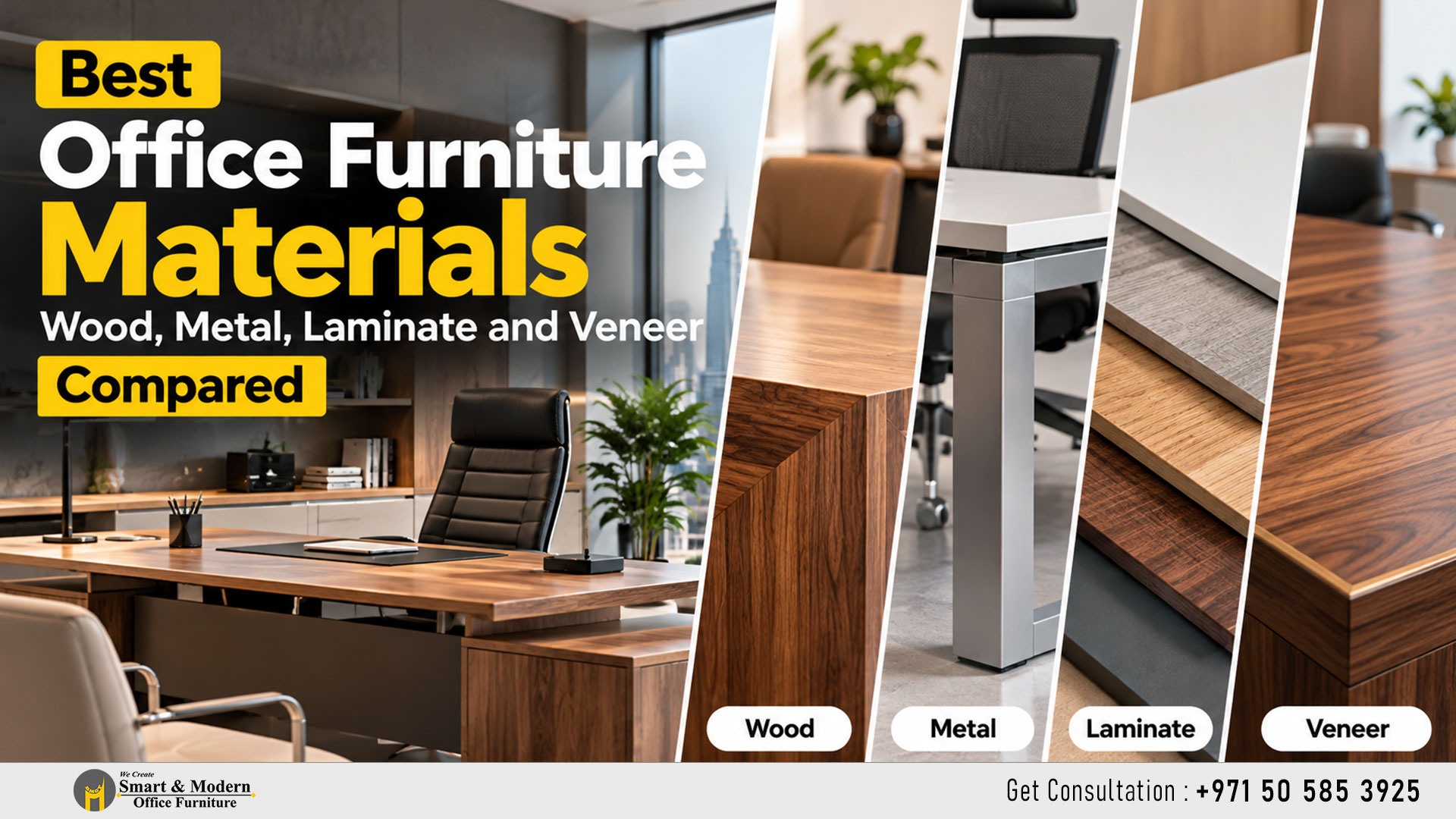
Best Office Furniture Materials: Wood, Metal, Laminate and Veneer Compared
-
By Smart Modern
- Posted on
- 0 comments
Choosing office furniture is not just about finding a design that looks good. The material used in a desk, workstation, storage cabinet or meeting table affects its appearance, durability, maintenance and overall cost.
With so many options available, deciding between wood, metal, laminate and veneer can be challenging. Some materials offer a natural, premium finish, while others are better suited to busy workplaces that need practical and easy-to-maintain furniture.
If you are planning a new office or upgrading your existing workspace, understanding these materials will help you make a more informed decision. Here is how the four popular office furniture materials compare.
1. Wood: A Natural and Timeless Choice
Wood has long been used in office furniture because of its natural appearance, strength and distinctive grain patterns. It can bring warmth and character to executive offices, reception areas and meeting rooms.
Solid wood furniture is made from natural timber rather than an engineered wood core with a decorative surface. Depending on the wood species and construction, it can offer excellent longevity and may be refinished to refresh its appearance.
Advantages of wood
- Natural grain and a distinctive finish.
- A premium appearance for executive desks and boardrooms.
- Can be repaired or refinished in suitable cases.
- Different wood species offer a range of colours and textures.
Things to consider
Solid wood furniture can be more expensive than many alternatives and may require more care. Changes in humidity and temperature can affect natural timber, so appropriate finishes and maintenance are important.
Best suited for: Executive desks, premium conference tables, private offices and reception furniture where natural character is a priority.
2. Metal: Strong and Functional
Metal is widely used in office furniture, particularly for desk frames, workstation legs, storage cabinets and filing systems. Steel is a common choice because it provides a strong structure and can support the demands of busy workplaces.
Metal furniture often has a clean, contemporary appearance. Powder-coated finishes are available in colours such as black, white and grey, making it easy to coordinate metal components with different office interiors.
Advantages of metal
- Strong structural support when properly designed.
- Suitable for frequent daily use.
- Modern appearance that works well in commercial spaces.
- Metal surfaces can be relatively easy to clean.
Things to consider
Some metal surfaces can scratch, dent or corrode if their protective finish is damaged and maintenance is neglected. Metal desks may also feel less warm visually than furniture with wood finishes.
Best suited for: Workstation frames, office storage, filing cabinets, industrial-style interiors and furniture that needs a sturdy supporting structure.
3. Laminate: Practical for Everyday Office Use
Laminate is a popular surface option for modern office desks, workstations, cabinets and meeting tables. It is commonly applied over an engineered wood panel, such as particleboard or MDF, to provide a decorative and protective outer layer.
Available in a wide variety of colours, patterns and woodgrain designs, laminate makes it possible to achieve different styles without using solid timber.
Advantages of laminate
- Available in many colours, patterns and finishes.
- Generally easy to clean and maintain.
- Can provide good resistance to everyday wear, depending on the laminate grade.
- Offers a wide range of design options for different budgets.
Things to consider
The quality of the laminate, the underlying panel and the edge finishing all affect the finished product. Water entering exposed joints can damage some engineered wood cores, and chipped laminate can be difficult to repair invisibly.
Best suited for: Office workstations, shared desks, storage cabinets, reception counters and everyday commercial furniture.
4. Veneer: The Look of Real Wood
Wood veneer is a thin layer of natural wood applied to a core material, such as MDF or another engineered panel. Because the visible surface is real wood, veneer provides natural grain patterns and a finish that can look very similar to solid timber.
Veneer is often chosen for furniture where appearance matters, but a solid-wood construction is not necessary for every component.
Advantages of veneer
- Features genuine wood grain.
- Creates an elegant, high-end appearance.
- Allows attractive timber finishes over engineered panels.
- Can be used for coordinated executive desks, cabinets and meeting tables.
Things to consider
Veneer needs suitable protection and careful maintenance. Scratches, deep chips and water damage may require specialist repairs, and refinishing depends on the veneer thickness and finish.
Best suited for: Executive furniture, boardroom tables, premium reception desks and offices that require a refined wood finish.
5. Wood, Metal, Laminate and Veneer: A Quick Comparison
| Feature | Wood | Metal | Laminate | Veneer |
|---|---|---|---|---|
| Appearance | Natural and timeless | Modern and industrial | Highly versatile | Natural wood grain |
| Durability | Depends on species and construction | Strong structural potential | Good with suitable grade and core | Depends on veneer, core and finish |
| Maintenance | May need periodic care | Usually straightforward | Generally easy | Requires careful cleaning |
| Cost | Often higher for solid wood | Varies by design and finish | Often budget-friendly | Varies by wood species and construction |
| Common use | Executive furniture | Frames and storage | Workstations and desks | Premium desks and tables |
These are general comparisons. Actual performance and price depend on material grade, construction, finish, usage and supplier.
6. Which Material Is Best for Your Office?
The right choice depends on how your business uses its workspace.
For a busy corporate office: Laminate workstations with sturdy metal frames can be a practical option. They offer a choice of finishes and are generally straightforward to maintain.
For an executive office: Veneer or solid wood can create a more refined appearance. The decision depends on your preferred finish, budget and maintenance requirements.
For storage and filing: Metal cabinets can be suitable where strength and secure storage are priorities, while laminate-finished cabinets can coordinate with the rest of the office furniture.
For meeting rooms: Veneer can deliver a premium, natural look, while laminate offers a wide range of designs for everyday conference tables. Metal frames can provide additional structural support.
For offices with a limited budget: Consider laminate surfaces paired with well-built frames and quality hardware. This combination can balance appearance, functionality and cost.
7. What to Check Before Buying Office Furniture
Before choosing a material, look beyond the surface finish. Ask about the construction of the furniture, the quality of its core panels, the thickness and protection of the surface, edge finishing, frame strength and hardware.
Consider how frequently the furniture will be used and how easy it will be to maintain. For example, a reception counter may need to handle constant visitor contact, while an executive desk may place more emphasis on finish and appearance.
It is also worth asking about warranties, care instructions and customization options. A good material choice should suit both your office design and the practical demands of your business.
For businesses in Dubai and across the UAE, consider the demands of daily commercial use and follow the manufacturer’s care recommendations, particularly where furniture is exposed to air conditioning, sunlight or changing indoor conditions.
Office Furniture Solutions Tailored to Your Business
At Smart & Modern Office Furniture, we understand that every business has different workspace requirements. That is why we offer office furniture solutions designed around your office layout, preferred materials, budget and day-to-day operations.
Whether you need modern workstations for your team, executive desks with premium finishes, durable storage cabinets or customized meeting room furniture, our team can help you select suitable materials and designs for your space.
From ready-made furniture to customized solutions, we focus on combining functionality, quality and contemporary design to create workspaces that work for your business.
Planning a new office or upgrading your existing workspace in Dubai or anywhere across the UAE? Contact Smart & Modern Office Furniture to explore furniture options tailored to your requirements and create a workspace that reflects your business.
