
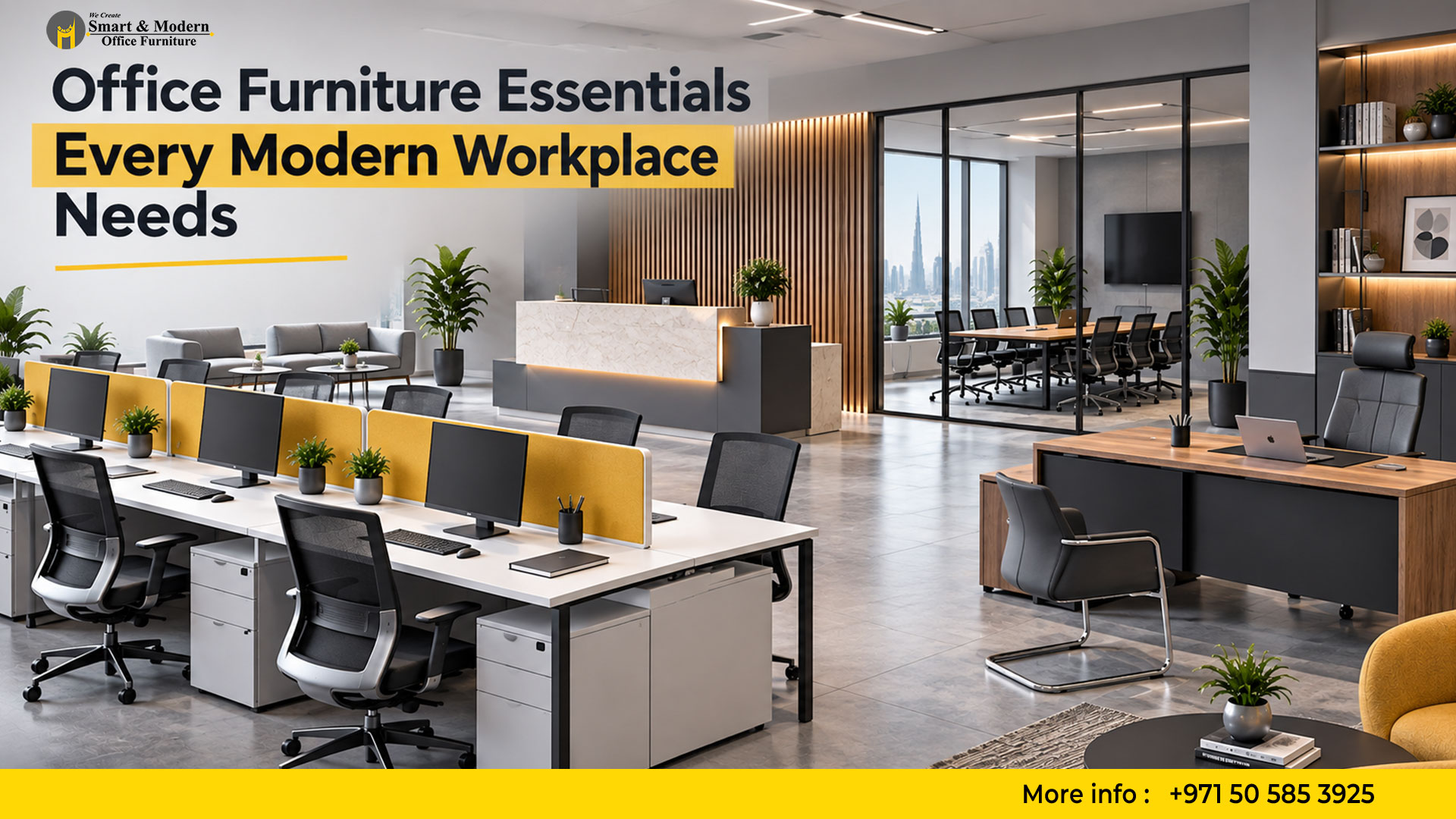
Office Furniture Essentials Every Modern Workplace Needs
-
By Smart Modern
- Posted on
- 0 comments
A modern workplace is more than desks and chairs. The right office furniture can influence how employees work, move, collaborate and use the available space. Research on office ergonomics consistently highlights the importance of properly designed and adjustable workstations, while workplace-design research also shows that the physical environment contributes to employees’ workplace experience.
Whether you are setting up a new office, renovating an existing workspace or expanding your team, these are the key office furniture essentials to consider.
1. Ergonomic Office Chairs
An office chair is one of the most important pieces of furniture for employees who spend much of their working day at a desk.
According to OSHA, a properly designed and adjustable chair should provide support for the back, legs, arms and body while allowing users to change their sitting position. Adjustable seat height, lumbar support, suitable seat depth and adjustable armrests can help employees achieve a more neutral working position.
Research has also examined whether ergonomic chair interventions can reduce musculoskeletal symptoms among office workers, although systematic reviews note that the overall evidence varies in quality.
Look for: adjustable height, lumbar support, suitable seat depth, breathable materials and stable construction.
2. Office Desks and Workstations
A desk needs to provide enough surface area for monitors, keyboards, documents and other frequently used equipment without forcing employees into awkward positions.
OSHA recommends adequate leg clearance and sufficient desk depth so monitors and other equipment can be positioned appropriately. Adjustable work surfaces can also accommodate different users and working positions.
For modern offices, businesses can consider:
- Executive desks
- Staff workstations
- Bench workstations
- Modular workstations
- Height-adjustable desks
- Custom-made office desks
The right choice depends on employee roles, available floor space and the way teams work.
3. Office Storage Solutions
Storage is often overlooked when planning an office, but it plays an important practical role.
Filing cabinets, mobile pedestals, storage cabinets, credenzas and display/storage units can help keep documents and everyday office items organized while making better use of available space.
Storage should be planned alongside the workstation layout rather than added after the office is completed.
4. Meeting Tables and Conference Furniture
Modern workplaces need dedicated areas for meetings, presentations and collaboration.
A suitable meeting table should provide enough space for participants while allowing comfortable movement around the room. The size and shape can be selected according to the number of users and the available room.
Common options include:
- Boardroom tables
- Meeting tables
- Modular conference tables
- Collaborative tables
- Small discussion tables
5. Reception Furniture
The reception area creates an important first impression for visitors and clients.
A reception desk should combine professional appearance with practical requirements such as storage, cable management, suitable working height and sufficient workspace. Matching visitor chairs and complementary storage can create a more cohesive reception environment.
6. Visitor and Lounge Seating
Not every interaction happens at an employee’s workstation. Visitor chairs, lounge seating and informal meeting furniture can provide dedicated areas for short discussions and client meetings.
These pieces can also help divide an office into different functional zones without relying entirely on permanent walls.
7. Flexible and Adjustable Furniture
Modern workplaces increasingly need furniture that can adapt to different activities and users.
OSHA notes that adjustable work surfaces and furniture can help accommodate different users and support changes in working posture.
Modular workstations, movable tables, height-adjustable desks and flexible seating can therefore be useful when office requirements may change over time.
8. Furniture Designed Around the Workspace
Buying individual furniture pieces is only one part of office planning. Their layout, dimensions and relationship with other elements are equally important.
A well-planned workstation should allow employees to position their monitor, keyboard and mouse comfortably while maintaining adequate space for movement. Lighting and glare should also be considered because excessive glare can contribute to visual discomfort and may encourage awkward viewing positions.
Conclusion
The essentials of a modern workplace go beyond having a desk and chair for every employee. Ergonomic office chairs, functional workstations, smart storage, meeting furniture, reception desks, visitor seating and flexible furniture can work together to create a more organized and adaptable workplace.
Research supports paying attention to workstation design and ergonomics, while also showing that furniture alone is not a complete solution—proper setup, user adjustment and workplace practices matter as well.
For businesses planning an office in Dubai, choosing furniture around the space, workforce, workflow and long-term requirements can help create a workplace that is practical, professional and built for everyday use.
