
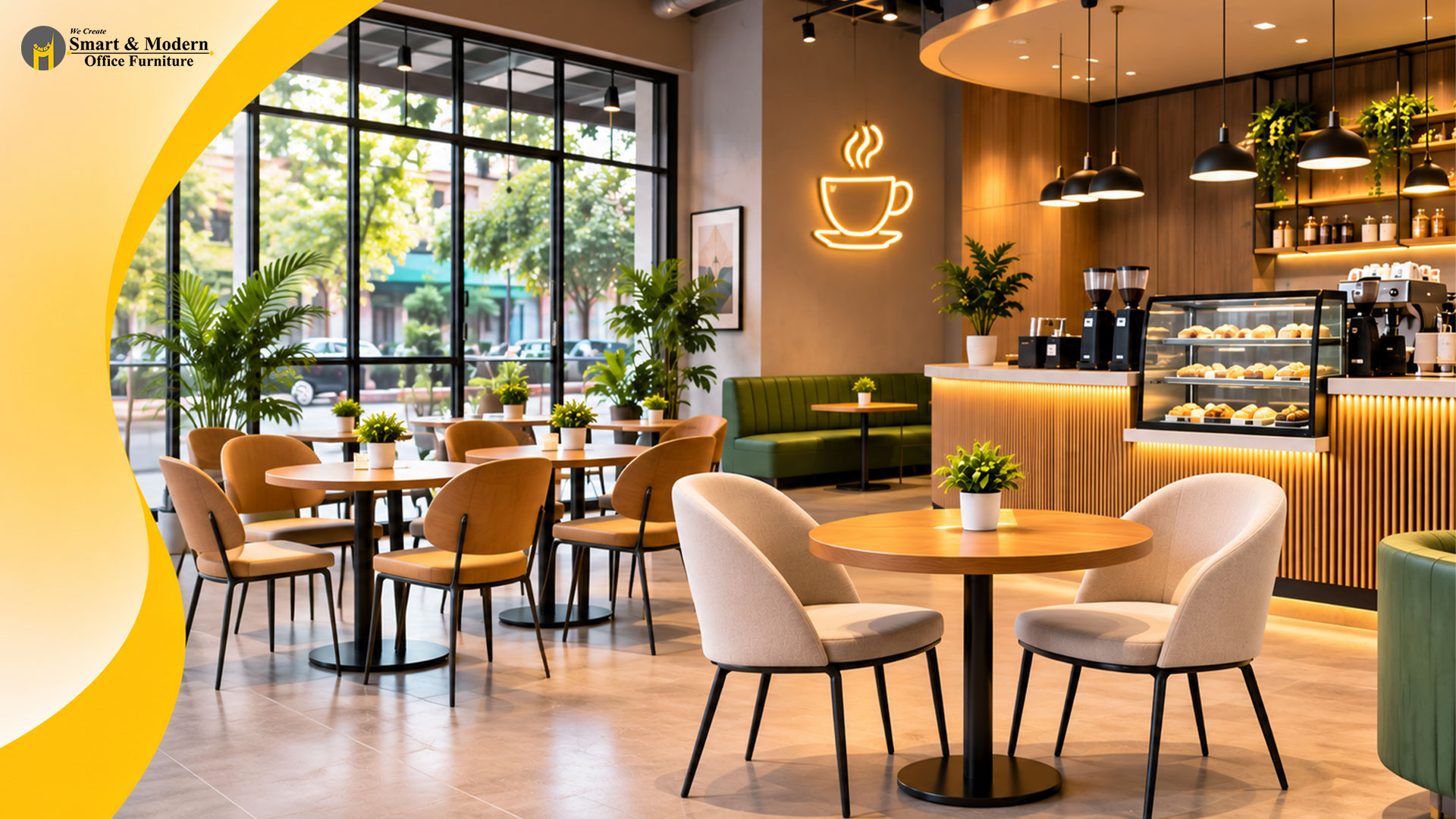
How to Design a Coffee Shop: From Layout Planning to Furniture Selection
-
By Smart Modern
- Posted on
- 0 comments
Designing a successful coffee shop involves more than selecting attractive furniture and decorating the interior. Every element, from the floor layout and customer seating to the service counter and lighting, should work together to create a comfortable and welcoming environment.
A well-planned coffee shop design improves customer experience, supports smooth daily operations and makes effective use of available space. Whether you are opening a small café, a premium coffee shop or a large commercial café in Dubai, choosing the right layout and furniture is essential.
1. Start with Proper Coffee Shop Layout Planning
The first step in designing a coffee shop is understanding the available space and planning how customers and employees will use it.
Before selecting furniture, consider the entrance, ordering counter, preparation area, customer seating, service pathways and storage requirements.
A practical coffee shop layout should include:
- A welcoming entrance and waiting area.
- A clearly visible ordering and payment counter.
- An organised coffee preparation area.
- Comfortable customer seating arrangements.
- Sufficient circulation space for customers and staff.
- Suitable storage for supplies and equipment.
A well-planned café layout helps prevent overcrowding and supports efficient daily operations.
2. Choose a Coffee Shop Interior Design Style
Your interior design creates the first impression of your coffee shop. The furniture, colours, lighting and decorative elements should reflect the identity of your business.
Some popular coffee shop interior styles include:
Modern Minimalist: Clean lines, simple furniture, neutral colours and uncluttered layouts.
Industrial Style: Metal furniture frames, exposed finishes, wooden tables and contemporary lighting.
Luxury Café Design: Premium upholstery, elegant finishes, customised counters and sophisticated seating.
Natural and Scandinavian Style: Light wood, comfortable seating, soft colours and natural materials.
Choose a design concept that matches your target customers, brand identity and business positioning.
3. Select the Right Coffee Shop Furniture
Furniture is one of the most important elements of coffee shop interior design. The right combination of tables, chairs, sofas and counters can improve comfort while making the space more functional.
Consider these essential café furniture items:
- Coffee Shop Tables: Round, square and rectangular tables for different seating arrangements.
- Café Chairs: Comfortable and durable chairs suitable for regular commercial use.
- Bar Stools: Ideal for counter seating and high tables.
- Sofas and Lounge Seating: Suitable for relaxed seating areas and premium café interiors.
- Custom Coffee Counters: Designed to support ordering, billing and service operations.
- Storage Cabinets: Useful for organising supplies, accessories and daily essentials.
Select furniture based on the available floor space, expected customer capacity and overall interior concept.
4. Make Smart Use of Available Space
Space management is particularly important for small coffee shops and cafés in busy commercial locations.
Instead of filling the interior with large furniture, choose compact tables, appropriately sized chairs and flexible seating arrangements.
Wall-side seating, corner sofas, bar-height counters and custom-made furniture can help maximise usable space.
Maintain comfortable pathways between tables, the service counter and the entrance. This makes the coffee shop easier to navigate for both customers and staff.
5. Focus on Furniture Materials and Durability
Coffee shop furniture experiences frequent daily use, so selecting durable materials is essential.
Consider easy-to-clean table surfaces, strong furniture frames, quality upholstery and finishes suitable for commercial environments.
Wood, metal, laminate and upholstered materials can all work well when selected according to the design concept and maintenance requirements.
The goal is to balance appearance, comfort, durability and long-term value.
6. Plan Lighting, Colours and Customer Comfort
Lighting and colour selection influence the atmosphere of a coffee shop. Natural daylight, pendant lights and carefully positioned decorative lighting can create a welcoming environment.
Choose furniture colours and finishes that complement the walls, flooring and overall interior design.
Comfortable seating, suitable table heights, appropriate lighting and good spacing help create a pleasant customer experience.
7. Consider Custom-Made Coffee Shop Furniture
Every coffee shop has different dimensions, operational requirements and design preferences. Standard furniture may not always fit the available space or desired interior concept.
Custom-made café furniture allows business owners to select specific sizes, materials, colours and finishes.
Custom coffee counters, fitted sofas, wall-side seating, display units and specially designed tables can help create a distinctive interior while making better use of available space.
Working with an experienced furniture solutions provider can also help coordinate furniture selection, customisation and installation.
Conclusion
Designing a coffee shop requires careful planning, from the initial floor layout to the final furniture selection. A successful café combines functional space planning, attractive interiors, comfortable seating and durable furniture to create a welcoming environment.
At SMOF – Smart & Modern Office Furniture, we provide customised furniture solutions for commercial spaces, including cafés, coffee shops and hospitality environments. From custom counters and seating arrangements to furniture designed around your available space, we help bring your interior vision to life.
Plan better. Design smarter. Create a coffee shop worth visiting.
