
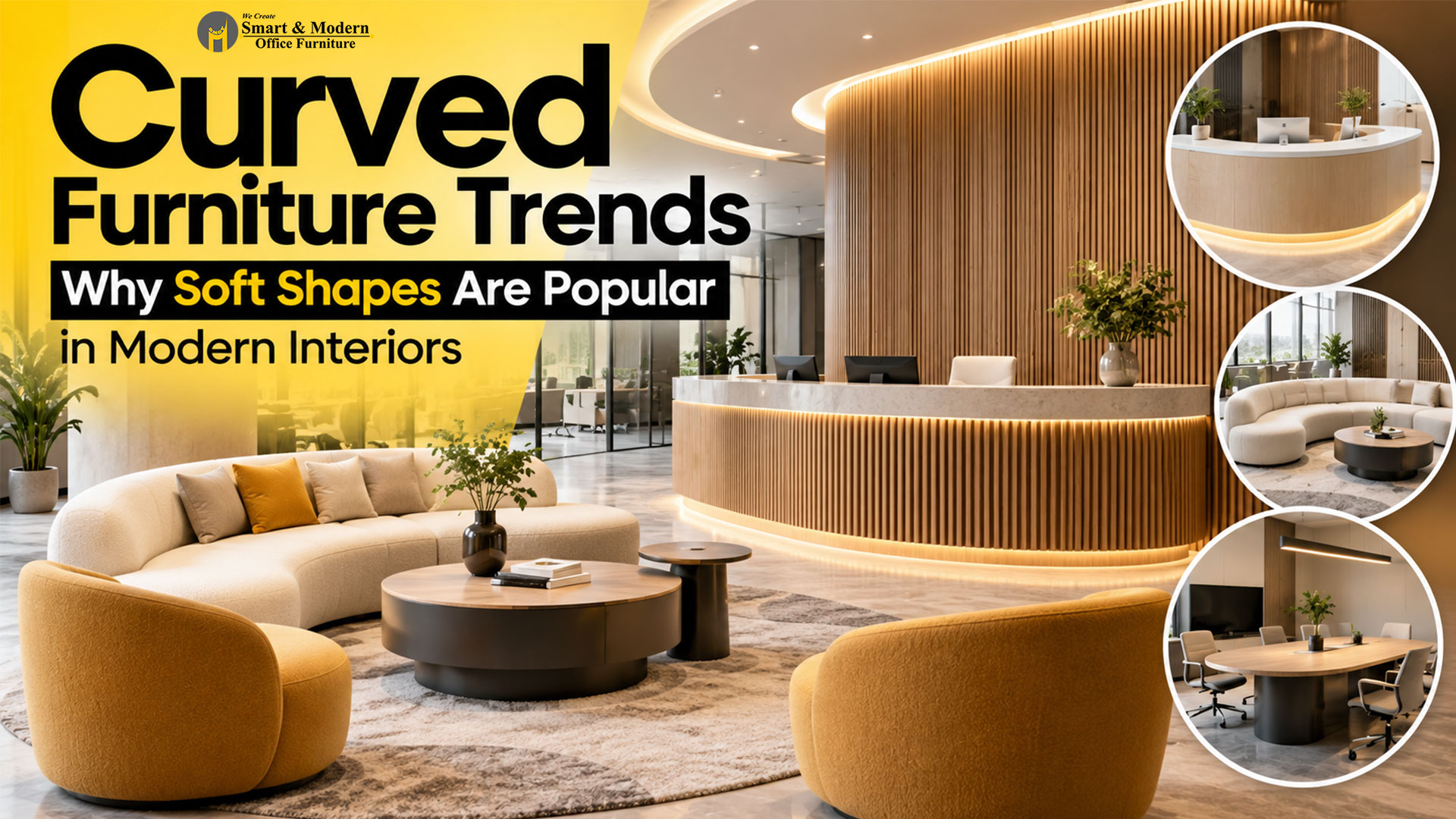
Curved Furniture Trends: Why Soft Shapes Are Popular in Modern Interiors
-
By Smart Modern
- Posted on
- 0 comments
Modern interior design is moving beyond sharp edges and rigid geometric shapes. Curved furniture, rounded edges, and organic silhouettes are becoming popular choices for contemporary offices, reception areas, hospitality spaces, and commercial interiors. From sculptural reception desks to curved office sofas and rounded meeting tables, these designs introduce a softer, more welcoming appearance without compromising functionality.
For businesses looking to upgrade their workspaces, curved office furniture offers an opportunity to combine modern aesthetics, practical space planning, and a distinctive professional image.
1. Why Curved Furniture Is Trending
Curved furniture introduces visual movement and creates a more natural flow within an interior. Unlike furniture dominated by straight lines and sharp corners, rounded forms can soften the appearance of a room and create a more relaxed atmosphere.
In contemporary office design, this approach is particularly useful in reception areas, breakout zones, executive lounges, and collaborative workspaces. Curved sofas, rounded coffee tables, and sculptural lounge chairs can make these areas feel more inviting for employees, visitors, and clients.
The trend also complements minimalist interiors, where simple shapes, restrained colours, and carefully selected furniture create a clean and sophisticated environment.
2. Curved Reception Desks for a Memorable First Impression
The reception area is often the first physical interaction a visitor has with a business. A curved reception desk can help create a distinctive focal point while giving the space a contemporary, professional appearance.
Rounded reception counters can be designed with wood finishes, textured panels, solid-surface materials, or subtle metallic details. Integrated lighting and coordinated storage can further enhance the design.
For offices in Dubai, curved reception desks can suit corporate headquarters, hotels, clinics, showrooms, and other commercial environments. The final design should consider the available floor area, visitor circulation, staff access, accessibility requirements, and the location of computer equipment and storage.
3. Curved Office Sofas and Lounge Seating
Office lounge areas are increasingly designed to support informal meetings, short breaks, and comfortable conversations. Curved sofas and rounded lounge chairs can help create a more relaxed setting while adding visual interest to the interior.
These furniture pieces work well in reception lounges, executive waiting areas, hospitality interiors, and collaborative office zones. Modular curved seating can also help define different areas within an open-plan office without relying entirely on solid partitions.
When selecting curved office sofas, consider seat depth, back support, upholstery durability, cleaning requirements, and the amount of space needed for people to move comfortably around the furniture.
4. Rounded Meeting Tables and Collaborative Workspaces
Meeting tables do not always need to follow traditional rectangular designs. Oval and rounded tables can create a softer visual profile and suit smaller discussion rooms, informal meeting areas, and collaborative workspaces.
Rounded table edges can also reduce the appearance of bulky furniture in compact interiors. Depending on the layout, circular or oval meeting tables may support face-to-face interaction and help distribute seating more evenly.
For practical office furniture planning, the table shape should be matched to the number of users, room dimensions, chair clearance, cable management, and technology requirements. Larger conference rooms may still benefit from rectangular tables where presentation equipment and structured seating arrangements are priorities.
5. How Curved Furniture Enhances Modern Office Interiors
Curved furniture can be incorporated into different workplace styles, from minimalist offices to premium executive interiors.
Minimalist offices: Choose neutral upholstery, simple rounded sofas, and oval tables to maintain a calm, uncluttered appearance.
Luxury executive offices: Combine sculptural lounge chairs with rich wood finishes, refined metal details, and soft indirect lighting.
Corporate reception areas: Use a curved reception counter as the main feature, supported by coordinated seating and restrained decorative elements.
Collaborative workspaces: Arrange modular curved sofas or rounded seating groups to create informal meeting zones within open-plan offices.
Hospitality and retail interiors: Incorporate curved display counters, waiting-area furniture, and rounded seating to create a consistent and welcoming design language.
The goal is to use curves intentionally rather than filling the entire space with rounded furniture. Combining curved pieces with straight-lined desks, storage cabinets, and shelving often produces a balanced contemporary interior.
6. Choosing Materials, Colours and Finishes
The materials used in curved furniture have a major influence on its appearance, durability, and suitability for commercial use.
Upholstered fabrics can create a soft and comfortable look for lounge seating. Leather and quality synthetic upholstery may suit executive and hospitality settings where the finish must complement a premium interior. Wood veneers and wood-effect laminates can add warmth to reception desks and tables, while metal details introduce contrast.
Neutral colours such as beige, grey, cream, and warm brown work well with organic shapes. Darker finishes can create a bold focal point, while muted greens and earthy tones can complement natural materials.
For commercial interiors in Dubai and the UAE, consider maintenance needs, sunlight exposure, daily usage, and the durability of surface finishes before finalising material selections.
7. Is Curved Office Furniture Suitable for Every Workspace?
Curved furniture can improve the visual character of a workplace, but the right choice depends on the room and its purpose.
Large curved sofas may be ideal for spacious reception lounges but less suitable for narrow offices. Rounded desks can create a distinctive design statement, although the internal workspace, storage, and staff movement must remain practical.
Before purchasing or commissioning custom furniture, measure the space and review the layout. A 2D floor plan or 3D office layout can help determine furniture placement, circulation space, seating capacity, and how curved pieces will work alongside existing office furniture.
For businesses planning a new office or renovation, coordinating furniture design with the overall interior concept can help create a more cohesive result.
Conclusion
Curved furniture is an effective way to introduce softness, visual interest, and contemporary character into modern interiors. From curved reception desks and lounge sofas to oval meeting tables and sculptural seating, rounded forms can help businesses create welcoming and memorable workspaces.
The most successful designs balance appearance with comfort, durability, circulation, and everyday functionality. By combining curved furniture with complementary materials, colours, and practical space planning, businesses can create modern office interiors that reflect their brand and support the way people work.
Smart & Modern Office Furniture provides office furniture and interior solutions for businesses in Dubai and across the UAE. Whether you are planning a reception area, executive office, or collaborative workspace, choosing furniture that fits your design and functional needs can help transform your environment.
Planning a modern office interior? Explore office furniture and interior solutions at https://smartofficefurniture.ae/.
