
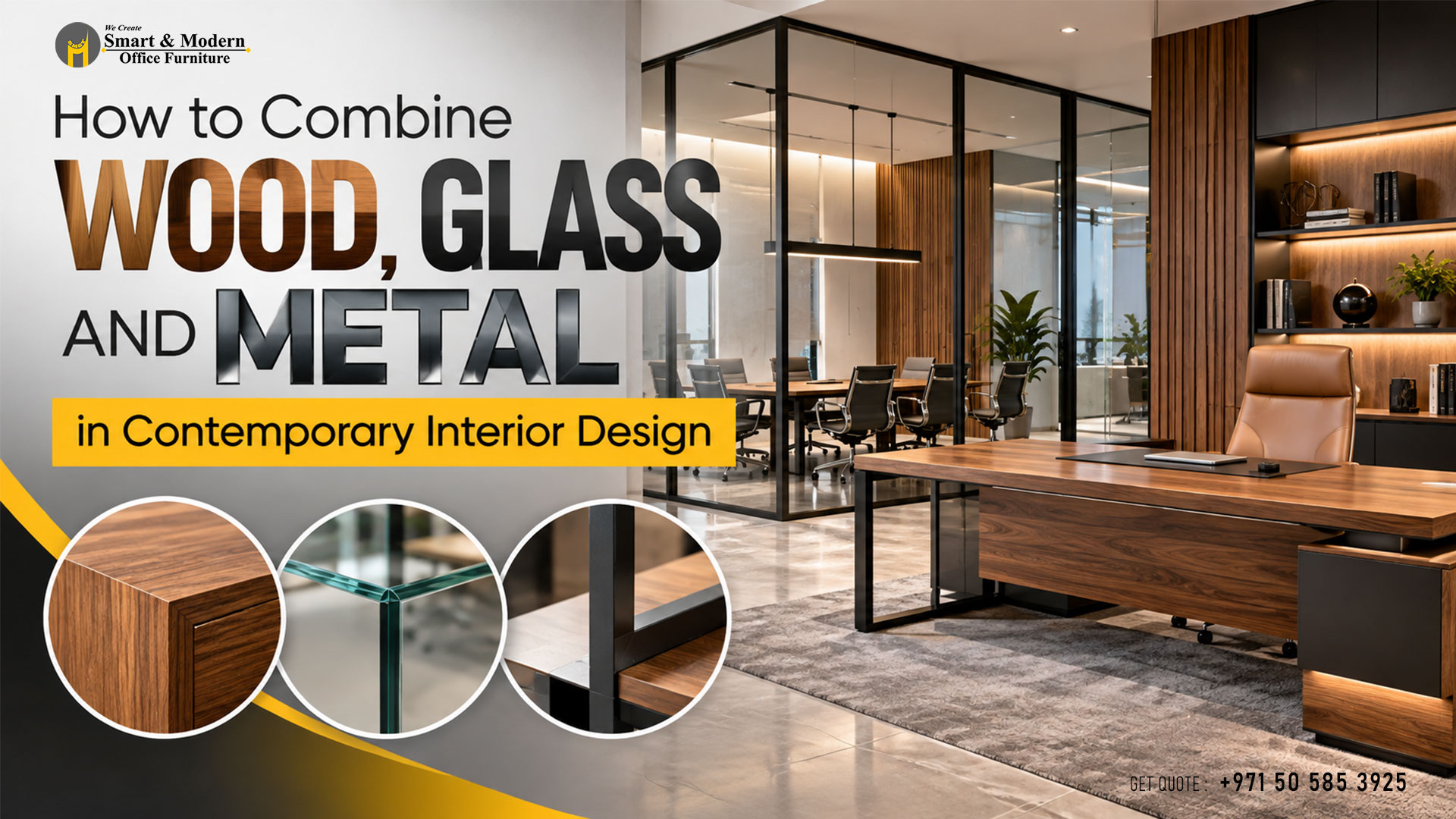
How to Combine Wood, Glass and Metal in Contemporary Interior Design
-
By Smart Modern
- Posted on
- 0 comments
Contemporary interior design is all about balancing materials, textures, functionality, and visual appeal. Among the most versatile materials used in modern interiors are wood, glass, and metal. Each brings a distinct character to a space: wood adds warmth, glass creates openness, and metal introduces structure and sophistication. When combined thoughtfully, these materials can transform offices, reception areas, meeting rooms, retail spaces, and residential interiors.
For businesses planning a modern workspace in Dubai, understanding how to combine wood, glass, and metal can help create interiors that look professional, feel welcoming, and remain practical for everyday use.
1. Use Wood to Add Warmth and Character
Wood is an essential element in contemporary interior design because it softens the appearance of modern spaces. Natural wood grains, oak finishes, walnut tones, and wood-effect laminates can introduce warmth without making an interior feel traditional.
In office interiors, wood can be used for executive desks, meeting tables, reception counters, storage cabinets, wall panels, and decorative features. Lighter wood finishes work particularly well in compact spaces because they help maintain a bright, open atmosphere. Darker finishes can create a more sophisticated appearance in executive offices and premium meeting rooms.
For a balanced design, choose one dominant wood tone and repeat it across selected furniture pieces or architectural details.
2. Use Glass to Create Openness and Light
Glass is widely used in modern interior design to create visual openness and allow natural light to move through a space. Glass partitions, meeting room walls, display cabinets, and decorative panels can make commercial interiors feel more spacious while maintaining clear functional zones.
In corporate offices, glass partitions are useful for creating private meeting rooms without completely separating them from the wider workspace. Frosted or patterned glass can provide additional privacy where required.
Glass also complements wood furniture by creating a contrast between solid, textured surfaces and smooth, reflective finishes. For safety and durability, select glass suitable for the intended application and ensure that it is installed correctly.
3. Introduce Metal for Structure and Contrast
Metal adds definition and a contemporary edge to interior spaces. Black powder-coated steel, brushed stainless steel, aluminium, and selected brass or champagne-gold finishes can complement both wood and glass.
Metal can be incorporated through desk legs, furniture frames, partition profiles, cabinet handles, lighting fixtures, shelving systems, and decorative trims. Black metal creates a bold contrast against light wood, while brushed metallic finishes offer a more subtle, refined look.
In commercial interiors, metal components can also provide practical structural support. The finish and specification should be selected according to the furniture’s intended use, maintenance requirements, and surrounding design.
4. Find the Right Balance Between the Three Materials
The key to combining wood, glass, and metal is ensuring that no material competes unnecessarily with the others. A useful starting point is to select one material as the main visual feature and use the remaining two as complementary elements.
For example, a modern office could feature a walnut executive desk as the focal point, glass partitions to maintain openness, and black metal frames for contrast. A reception area might combine a wood-clad counter, a glass display feature, and metallic detailing to create a polished first impression.
Consider the following design principles:
- Choose a consistent colour palette: Coordinate wood undertones with metal finishes and surrounding wall colours.
- Balance textures: Pair the grain of wood with smooth glass and clean metal lines.
- Avoid excessive finishes: Too many competing wood tones or metallic colours can make a space feel visually busy.
- Consider proportions: Use reflective glass and fine metal profiles to balance heavier wood furniture.
- Prioritise functionality: Material choices should suit the space, traffic levels, cleaning requirements, and intended use.
5. Applying This Combination to Office Interiors in Dubai
For businesses in Dubai and across the UAE, combining wood, glass, and metal can work well in corporate offices, hospitality environments, retail interiors, and commercial reception areas.
A contemporary office design might use warm wood finishes to create a welcoming atmosphere, glass meeting room partitions to improve the sense of space, and dark metal details to establish a clean architectural style. In executive offices, richer wood tones and subtle metallic accents can create a premium appearance without relying on excessive decoration.
Material selection should also account for local operating conditions. Consider sunlight exposure, cooling systems, cleaning routines, and the expected level of use when choosing finishes. Glass placement and window treatments should be planned to manage glare, while furniture surfaces should be selected for their durability and maintenance needs.
Working with an experienced interior solutions provider can help ensure that furniture, partitions, finishes, lighting, and space planning work together as one cohesive design.
6. Common Mistakes to Avoid
Even high-quality materials can look disconnected when they are not coordinated properly. Avoid mixing too many wood colours, using shiny metal finishes throughout the entire space, or installing glass partitions without considering privacy and acoustics.
It is also important not to select materials based on appearance alone. Furniture edges, metal coatings, glass specifications, and surface finishes all affect long-term performance. Requesting material samples and reviewing them under the actual lighting conditions can help you make more informed decisions.
Conclusion
Combining wood, glass, and metal is an effective way to achieve a contemporary interior that feels balanced, functional, and visually distinctive. Wood introduces warmth, glass enhances openness, and metal adds definition. When these materials are coordinated through a consistent palette and thoughtful proportions, they can elevate everything from executive offices to reception areas and modern commercial interiors.
Smart & Modern Office Furniture provides office furniture and interior solutions to help businesses create practical, cohesive workspaces. Whether you are planning an executive office, a collaborative workspace, or a contemporary reception area, carefully selected materials can make a lasting difference.
Planning a modern office interior in Dubai? Explore furniture and interior solutions from Smart & Modern Office Furniture.
Website: https://smartofficefurniture.ae/
